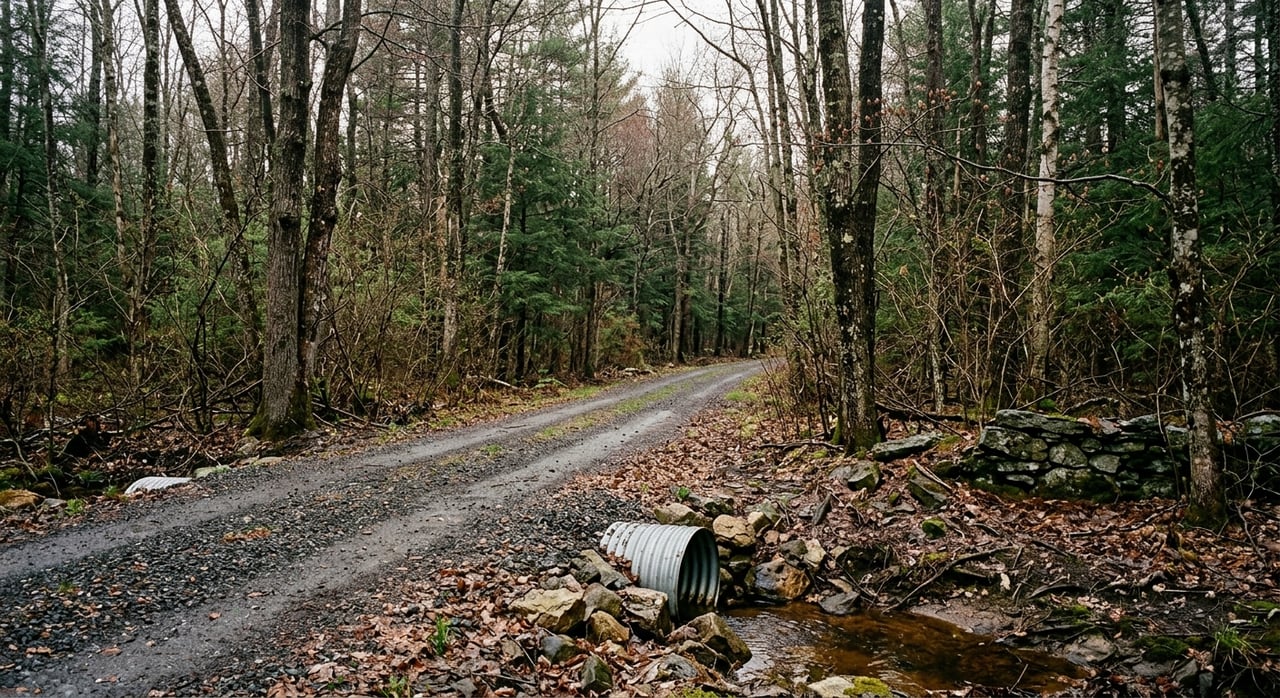
Wondering if that beautiful wooded parcel in Thetford is ready for your plans? It is easy to fall for the privacy, views, and rural character here, but land in Thetford often comes with layers of zoning, access, environmental review, and long-term stewardship questions. If you are thinking about buying land or woodland property in Thetford, this guide will help you focus on the details that matter most before you make an offer. Let’s dive in.
Why Thetford appeals to land buyers
Thetford offers a mix that many Upper Valley buyers want. It feels distinctly rural, yet the town describes itself as a community of five and a half villages along the Connecticut River, with many residents commuting to Hanover and Lebanon. The town also notes direct road access to I-91 and Routes 113, 244, 132, and 5.
That balance matters when you are buying land. You may want privacy and woods, but you may also care about drive time, road access, and whether a future home site works with the town’s broader conservation priorities. In Thetford, those factors often connect.
The town’s zoning philosophy also makes its priorities clear. The current bylaw is designed to protect public health and welfare while preserving natural resources, scenic beauty, and historic character. For you as a buyer, that means wooded acreage is often viewed not just as a build site, but as part of a larger rural landscape.
Start with zoning before price
If you are comparing parcels, zoning should be one of the first things you review. Thetford’s zoning bylaws took effect February 12, 2024, and divide the town into several districts, including Village Residential, Neighborhood Residential, Community Business, and Rural Residential. For many land and woodland buyers, the Rural Residential district is the one that comes up most often.
What Rural Residential means
The stated goal of the Rural Residential district is low-density land use centered on open space, farms, residences, and woodlands, with limited scattered commercial uses that are home-based or dependent on natural resources. In practical terms, the town is signaling that it wants to limit sprawl and pay close attention to visual and environmental impacts.
That does not mean a parcel cannot work for your plans. It does mean you should assume layout, access, and site impacts will matter during review.
When a zoning permit is required
The zoning office handles land development matters, including construction, subdivisions, and property line changes. A zoning permit is required to create a new lot, and new divisions are not allowed unless the resulting lots meet district rules.
Thetford also notes that permitted uses may be approved administratively, while conditional uses, variances, subdivisions, and appeals go to hearings before the Development Review Board. Incomplete applications are not acted on, and applications cannot be submitted by email.
Historic overlay can affect land
Some buyers assume historic review only matters for older houses. In Thetford, land in the Thetford Hill Historic Preservation Overlay District can face an added layer of review because all uses in that overlay are treated as conditional uses, with the Historic Preservation Committee advising the Development Review Board.
If a parcel is in or near that area, it is smart to understand that process early.
Access can make or break a parcel
A wooded lot may look straightforward on a map, but legal and physical access can be one of the biggest issues. Thetford’s bylaw says land development generally needs frontage on a public road or access through a permanent easement or right-of-way at least 30 feet wide.
That means you will want to verify more than whether a driveway seems possible. You should confirm the legal access rights, where the access is located, and whether the route will support the kind of use you have in mind.
Driveway and private road standards matter
Thetford has detailed standards that often affect wooded parcels. The town requires a 12-foot road surface, a maximum 15% grade over any 100-foot section, and turnouts or turnarounds every 500 feet on driveways or private roads that are 1,000 feet or longer.
If a bridge is involved, it must have an H12 design rating and signed engineering approval. Access to a town road needs approval from the Road Foreman and Selectboard, while access to a state highway requires Vermont Agency of Transportation approval.
For a buyer, this is a reminder that a long private approach through the woods may add real cost and design constraints.
Wetlands and streams shape buildability
In Thetford, the natural features on a parcel can strongly influence where you can build. Wetlands are one of the biggest examples.
The bylaw requires a naturally vegetated 50-foot buffer around mapped Class Two wetlands. It also notes that unmapped wetlands can still trigger review and may require a boundary delineation.
Riparian setbacks to know
Streams and shorelines matter too. The bylaw sets setbacks of 50 feet for first-order streams and 75 feet for second-order streams. It also sets 75-foot setbacks around several named lakes and ponds.
These rules can reduce the part of a parcel that is actually practical for a house site, driveway, or other improvements. A property with plenty of acreage may still have a much smaller usable envelope than you expect.
Why mapping is only the start
A map screenshot is helpful, but it is not the whole story. Thetford’s review process and conservation resources show that wooded land is often evaluated as an ecosystem, not simply as vacant acreage.
If a parcel includes wetlands, riparian areas, wildlife habitat, or key forest connections, your due diligence should go beyond the listing description.
State permits may come before construction
If your future plans include a well, septic system, or other potable water or wastewater system, there is another key step. Thetford states that construction cannot begin under a zoning permit until the Vermont Agency of Natural Resources issues the required permit.
The town’s land development guidance also tells applicants to submit all applicable state permits with the zoning application. For you, that means a parcel is not truly ready for a build just because local zoning seems favorable.
This is one reason land buyers benefit from a patient, step-by-step review process. You want to know which approvals are local, which are state-level, and how they affect timing.
Site plan review looks at the whole property
For projects that need site plan review, Thetford requires a scaled plan showing much more than lot lines. The plan may need to show boundaries, topography, vegetation, natural areas, wildlife habitat, streams, floodplains, wetlands, roads, driveways, easements, utilities, fire hydrants, and access points.
That broad review tells you something important about buying land here. The town is looking at how a project fits the site, not just whether a building can physically fit somewhere on the parcel.
Layout matters for future flexibility
The town’s development review standards encourage parcel layouts that minimize impacts on wildlife habitat, forest fragmentation, and agricultural land. That includes careful placement of lot lines, development envelopes, roads, driveways, utilities, and buffers.
If you want a future house site while preserving woods, trails, or privacy, smart placement matters. A good layout can help you protect the best parts of the acreage instead of accidentally cutting them up.
Woodland buyers should review conservation context
Thetford’s Conservation Commission is highly active and maintains natural resource inventories, town parcel information, forest block and connectivity maps, wetland and riparian maps, farmland maps, and a 2024 Town Lands Management Plan.
That is useful if your goals include recreation, forest stewardship, or a conservation-minded build. It suggests that land here is often part of a broader stewardship picture, especially where wooded parcels connect to other open land or conservation areas.
Questions worth asking early
Before you buy, it can help to ask:
- How does the parcel fit within the current zoning district?
- Is there legal frontage or a qualifying easement or right-of-way?
- Are there wetlands, streams, or setback areas that limit building options?
- Will a long driveway or private road need substantial upgrades?
- Will a well and septic design require state permitting before construction?
- Does the parcel connect to mapped forest blocks, habitat areas, or conservation lands?
- If subdivision is a future goal, what should be reviewed now?
These questions can save you time, money, and frustration later.
Tax treatment and subdivision deserve attention
Thetford’s Listers Office provides tax maps and assessment cards. It also notes that owners of agricultural and forest land may qualify for Vermont’s Current Use program, with at least 25 acres generally required.
For some woodland buyers, that can have a real impact on holding costs and long-term plans. It is worth understanding whether a parcel may fit that framework and how it aligns with your ownership goals.
Do not assume subdivision later
If you are buying a larger tract and think you may divide it later, investigate that before closing. Vermont law requires an Act 250 disclosure statement before land is divided or partitioned, and Thetford’s zoning framework flags Act 250 as a separate state-level issue for larger development.
Subdivision potential is never something you want to treat as automatic. The earlier you review it, the better.
A practical approach to buying land in Thetford
The clearest takeaway is this: wooded land in Thetford is rarely simple raw land. A single parcel may be affected by zoning, access rules, wetlands or stream setbacks, driveway standards, water and wastewater permitting, tax treatment, and conservation considerations all at once.
That does not make land here less appealing. In many ways, it is part of what protects Thetford’s rural character and long-term value.
If you are considering land or woodland property in Thetford, the best move is to slow down, ask good questions, and evaluate the parcel based on your actual goals. Whether you want a future home site, recreational acreage, or a conservation-minded purchase, local guidance can help you see the full picture before you commit.
If you are thinking about buying land in Thetford or elsewhere in the Upper Valley, Carter Auch can help you evaluate acreage with a practical, locally informed approach.
FAQs
What should you check before buying land in Thetford VT?
- You should verify zoning, legal access, road frontage or easements, wetlands and stream setbacks, driveway feasibility, and whether state permits for water or wastewater systems will be needed.
How does Rural Residential zoning affect land in Thetford VT?
- Rural Residential zoning is intended to keep land low-density and focused on open space, farms, residences, and woodlands, so the town may closely review layout, visual impact, and environmental sensitivity.
Can wetlands affect woodland property in Thetford VT?
- Yes. Thetford requires a naturally vegetated 50-foot buffer around mapped Class Two wetlands, and unmapped wetlands can still trigger review or require delineation.
What access rules apply to land parcels in Thetford VT?
- Land development generally needs frontage on a public road or access by a permanent easement or right-of-way at least 30 feet wide, and driveways or private roads must meet town standards.
Do you need state permits to build on land in Thetford VT?
- If your project needs a well, septic system, or other potable water or wastewater system, required permits from the Vermont Agency of Natural Resources must be issued before construction begins under a zoning permit.
Can you subdivide woodland property in Thetford VT later?
- Possibly, but you should not assume it. A zoning review is needed for lot creation, resulting lots must meet district rules, and Vermont law requires an Act 250 disclosure statement before land is divided or partitioned.